
Testimonial · Academic coaching · Disabled veteran · Neurodiverse learner
The Alcorn Method
She graduated college at 16 and joined the Air Force. A stroke took it all back. This is how she started over.
Danita Alcorn served in the United States Air Force. She is a disabled veteran living with epilepsy, a chronic illness that makes learning and retaining new material genuinely hard.
The last time she tried to go back to school after her stroke, the stress put her in the hospital.
This fall she is finishing the first semester of her cybersecurity degree. The way we taught her now carries her name.
The problem was never her
School is built for a brain that holds things. Read it once, retain it, build on it next week. When that is not how your brain works, you are not offered a different route. You are offered the same route and told to try harder.
Danita tried harder. It put her in a hospital bed.
So the question we started with was not how to make her study more. It was what the material would have to look like for trying hard to stop being dangerous.
In her words
“The studying ain't sticking. It's kinda frustrating.”
“I do want to learn how to get the results you are getting.”
“You need to do something like this and distribute it. Put my face on it.”
“I had to really try studying the book material. So yay, I did it all on my own.”
Timeline
- Sep 2026Test 1 prepthe first reference sheet
- Oct 2026Test 2loops, functions, program design
- Oct 2026File handlingand the first step by step sheets
- Nov 2026Functions that returntry/except, dictionaries
- OngoingSelf-advocacyaccommodations she now requests herself
What we built, and why
What we taught
Her course, not ours. The chapters her professor assigned, in his order, in his words. Loops, functions, files, exceptions, dictionaries. We never replaced the syllabus. We broke it into steps small enough to finish one at a time, so the course stopped arriving all at once.
How we taught it
One sheet per assignment. Every step is one action, followed by a line that begins You should see. If the screen matches, she moves. If it does not, the sheet already names the three most likely reasons. Nothing is held in memory that does not have to be.
Why it works for her
Memory is the thing the illness takes. So the sheets do not ask her to remember. They ask her to compare. A page that tells you what the screen should say removes the exact load that makes it challenging to learn.
What the Alcorn Method is
Three rules, in the order they matter.
- 1
Start here. Every sheet opens where the learner actually is, not where the syllabus assumes they are. The first step is one they can already do.
- 2
You should see. No step is complete without a described result. The exact output, the exact error, the exact thing on the screen. The learner checks themselves, in the moment, without waiting for anyone.
- 3
Check. A final list of what the grader is actually grading, plus a short section naming the mistakes everyone makes. The answer key lives with a study partner, not the learner.
The method started as a fix for one Python class. It now runs every HtW tutoring engagement, from a sixth grader's science test to a psychologist's licensing exam, and it is open for any tutor to use. The Python sheet shows it in full; here is how tutoring works.
Tutoring was not the whole job
A sheet does not fix a disability accommodation that has not been requested.
Alongside the coursework we made sure she got the supportive services she was entitled to, and more importantly, we taught her how to ask for them herself. What the accommodation is called. Who to ask. What a request letter has to contain. How to put it in writing.
That is the part that outlasts us. The sheets get her through this semester. Knowing how to advocate for herself gets her through the degree.
This is what accessible actually means
Around one in five people is neurodiverse. Hacking the Workforce builds for that reality rather than treating it as an exception, in our body doubling sessions, in our clinics, and in how we tutor.
Accessible does not mean easier. Danita's course was not easier. She sat the same tests, against the same syllabus, graded by the same professor.
Accessible means the material stops demanding the one thing a person cannot give it. For her that thing was memory. For someone else it is sustained attention, or reading speed, or a quiet room.
A career in cyber should not be reserved for people whose brains were already a match for how school is run. That is the whole reason this organization exists, and it is why a tutoring method ended up with a veteran's name on it.
What we don't publish
We don't publish grades, scores, the school, or the professor. Danita chose what of her story appears here and at what depth. Nothing on this page went up without her reading it first.
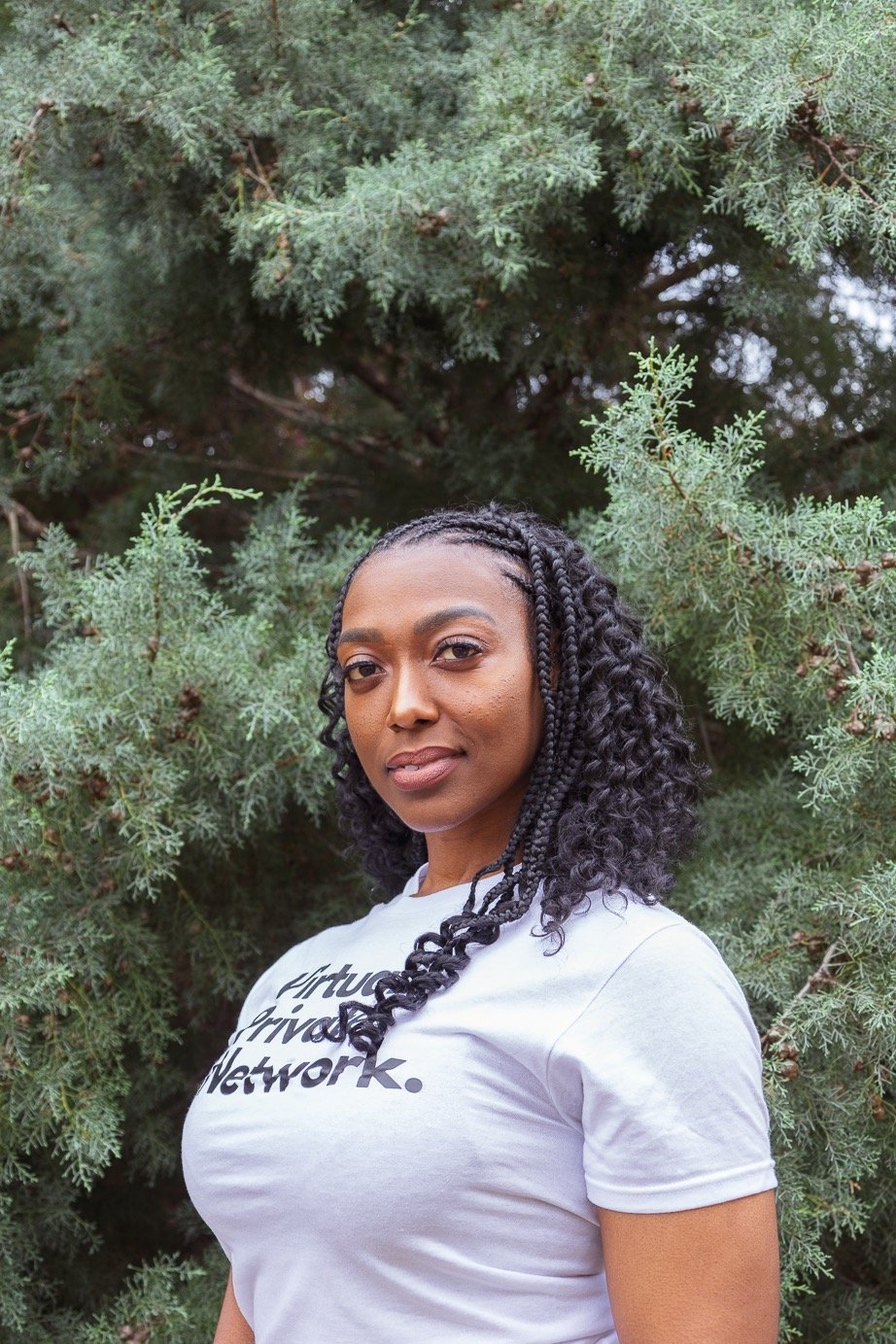
We publish a learner's face only when they ask us to. Most of our stories show the materials, the desk, the screen. Danita sent us hers.
If a course is killing you softly, that is information about the course.
Programming, networking, security, statistics. Veterans, neurodiverse learners, people coming back to school after their life changed shape. If there is a syllabus, there is a sheet.